White County Dog Registration Information
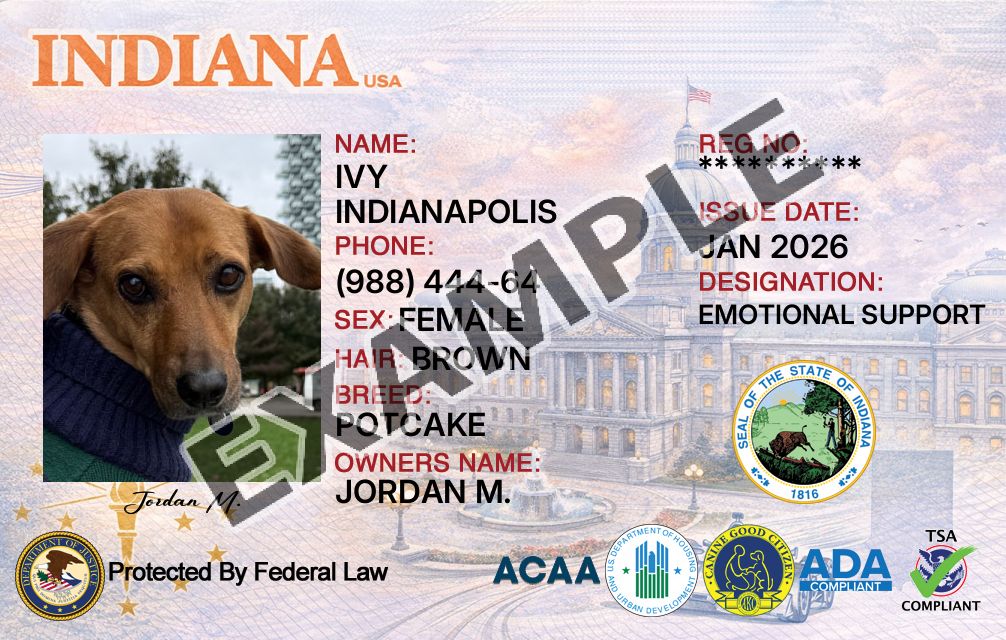
Service Dogs and Emotional Support Animals in White, Indiana
If you’re asking “where do I register my dog in White County, Indiana for my service dog or emotional support dog,” the answer usually involves two separate topics: (1) local dog licensing (often tied to rabies vaccination records) and (2) the legal status of a service dog or emotional support animal (ESA). In White County, the most reliable place to start is the county’s local public health office, which is commonly involved in rabies-related requirements and local animal-related administration.
Where to Register or License Your Dog in White County, Indiana
Office details below are from official government sources when available. If you live inside a city or town with its own animal control or registration rules, you may have additional municipal requirements beyond county-level guidance.
Primary County Office (Official)
White County Health Department
If You Live Within Monticello City Limits
Some municipalities within White County may have their own animal control rules (including registration tags or identification requirements). If you live in the City of Monticello, confirm whether city registration is required in addition to (or instead of) any county process.
Overview of Dog Licensing in White County, Indiana
What “dog registration” usually means locally
In many Indiana communities, “registering a dog” means getting a local dog license (sometimes issued as a tag/registration number) and showing proof of rabies vaccination. The details (who issues the license, whether it is annual, and what documentation is needed) can vary by county and by city/town ordinances inside the county.
Why rabies records matter
Rabies vaccination is a public health requirement in Indiana, and local licensing systems commonly use rabies certificates or rabies tag information as a core piece of the licensing process. Even if a specific “license tag” is not required everywhere, rabies proof is frequently required for compliance and for resolving situations like animal bites or stray pickup.
What You Need Before Registering a Dog
Commonly required items for a dog license in White County, Indiana
Requirements can differ depending on where you live in White County (county-wide vs. city/town rules). These are the most common items local offices request when issuing a dog license or registration record:
- Proof of rabies vaccination (rabies certificate from your veterinarian; sometimes rabies tag number)
- Owner identification (a government-issued photo ID)
- Proof of residency in White County, Indiana (commonly a utility bill, lease, or similar document if requested)
- Dog details (name, age, sex, color/markings, breed or mix, and any microchip number if applicable)
- Spay/neuter documentation (if fees differ by altered vs. unaltered dogs in the local rules)
- Payment method for any licensing fee (fees and accepted payment types can vary)
Steps to Register or License a Dog in White County, Indiana
Step-by-step process (typical workflow)
-
Confirm which agency handles your address.
Start with the White County Health Department in Monticello to confirm whether your dog licensing/registration is handled at the county level or through your city/town (if you live in an incorporated municipality).
-
Get your dog’s rabies vaccination up to date.
Ask your veterinarian for the rabies certificate and keep it with your records. If your dog is due, schedule vaccination before attempting to license/register.
-
Gather your documentation.
Bring rabies proof, your ID, and any other documents the office requests (such as proof of residency or spay/neuter documentation).
-
Submit the registration/licensing request.
Ask whether the office issues a physical tag, a registration number, or a receipt, and whether renewals are required annually.
-
Keep your proof handy and update it when needed.
Keep your license/receipt and rabies certificate available, especially for travel, housing documentation, or if your dog is ever lost and recovered.
If your dog is a service dog or ESA
You generally follow the same local licensing requirements as any other dog (rabies proof, fees, renewals), unless a specific local ordinance provides an exemption. The dog’s service or support role does not automatically replace local licensing rules.
Service Dog Laws in White County, Indiana
What makes a dog a “service dog”
A service dog is generally defined by what the dog is trained to do: the dog is individually trained to perform specific tasks for a person with a disability. Examples include guiding a person who is blind, alerting to a medical condition, retrieving items, or interrupting harmful behaviors. The key is task-trained assistance, not a certificate or online registration.
No universal federal registration
There is not one official, universal federal registry that you must use to “register” a service dog. In most everyday situations, service dog status is determined by the dog’s training and behavior and the handler’s disability-related need, while local dog licensing remains a separate county/city process.
Dog license vs. service dog status vs. ESA status (comparison)
| Category | What it is | Who issues it | Typical proof/documentation | Where it matters most |
|---|---|---|---|---|
| Dog License (Local) | A local license/registration record (often tied to rabies vaccination) for dogs kept in a specific county/city. | County or city/town government (often health department, animal control, or a clerk/administrative office depending on local rules). | Rabies vaccination certificate; owner/animal info; possibly spay/neuter proof; payment/receipt; sometimes a tag number. | Local compliance, animal control interactions, proof of ownership, community health and safety requirements. |
| Service Dog | A dog individually trained to perform tasks for a person with a disability. | Not “issued” by a registry; status is based on disability-related need and task training (plus meeting public access behavior standards). | Typically not a required “certificate.” Practical proof is the dog’s training and appropriate behavior; local licensing/rabies proof may still apply. | Public access in places open to the public, work and daily life accommodations consistent with applicable laws. |
| Emotional Support Animal (ESA) | An animal that provides emotional support that alleviates symptoms of a disability, typically recognized for certain housing situations. | Not a universal registry; commonly supported by documentation from a qualified healthcare provider for housing-related requests. | Housing-focused documentation (when needed) describing the disability-related need; local licensing/rabies proof may still apply. | Housing accommodations (rules can differ by setting and applicable law); ESAs do not automatically have the same public access rights as service dogs. |
Emotional Support Animal Rules in White County, Indiana
What an ESA is (and isn’t)
An emotional support animal supports a person’s mental or emotional disability primarily through the animal’s presence and companionship. Unlike a service dog, an ESA is not defined by performing trained tasks for public access. ESAs are most commonly relevant in housing contexts.
Local licensing still applies
Even if your dog is an emotional support animal, you may still need to comply with dog licensing requirements in White County, Indiana (or within your city/town). ESA status does not replace standard public health requirements such as rabies vaccination proof.
Municipal differences within White County
White County includes incorporated areas that may set additional rules (for example, city-specific registration tags or identification requirements). If you live within a city or town boundary, confirm whether your municipality has requirements that apply in addition to county guidance.
Frequently Asked Questions
What You May Need
-
Proof of rabies vaccinationRabies certificate from your veterinarian (and tag details if provided).
-
Proof of residencyIf requested (especially for county vs. municipal requirements).
-
IdentificationGovernment-issued photo ID for the dog owner/handler.
-
Spay/neuter documentation (if applicable)Sometimes used to determine license fee categories.
-
Payment for licensing feeAsk the local office which payment methods are accepted.
Disclaimer
Local laws, fees, office locations, and contact details can change. Residents should verify the most current information with their local animal services or licensing office in White County, Indiana.
Register A Dog In Other Indiana Counties
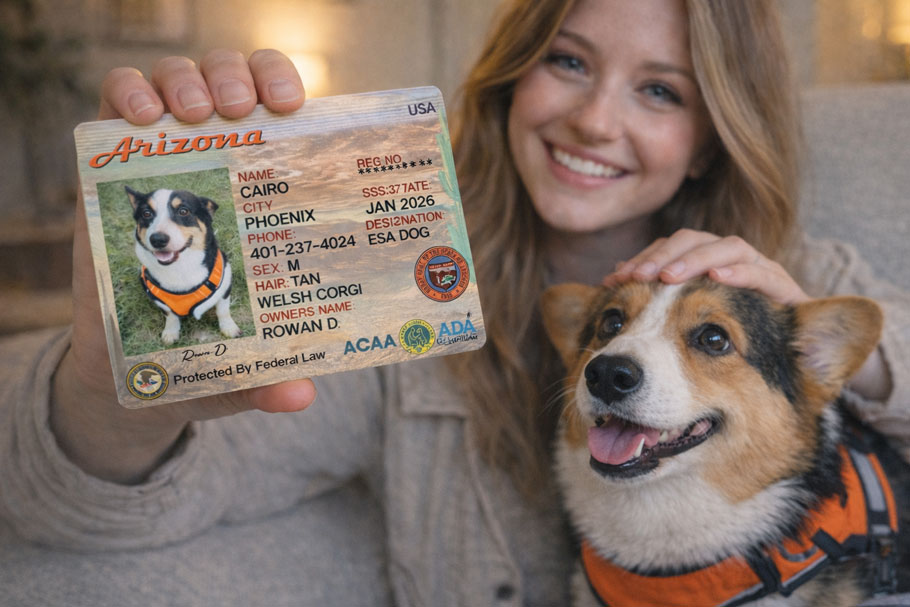
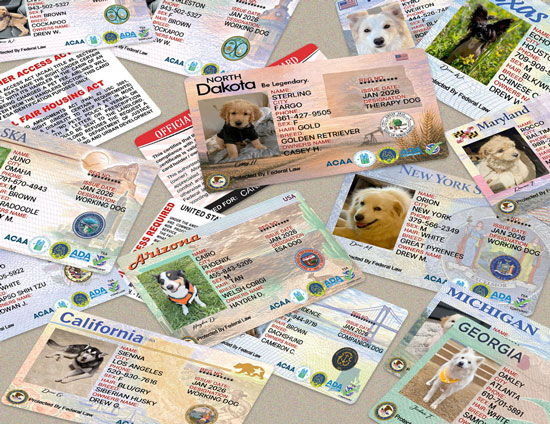
Select your county below to get started with your dog’s ID card. Requirements and license designs may vary by county, so choose your location to see the correct options and complete your pup’s registration.
- Adams County Dog Registration
- Allen County Dog Registration
- Bartholomew County Dog Registration
- Benton County Dog Registration
- Blackford County Dog Registration
- Boone County Dog Registration
- Brown County Dog Registration
- Carroll County Dog Registration
- Cass County Dog Registration
- Clark County Dog Registration
- Clay County Dog Registration
- Clinton County Dog Registration
- Crawford County Dog Registration
- Daviess County Dog Registration
- Dearborn County Dog Registration
- Decatur County Dog Registration
- DeKalb County Dog Registration
- Delaware County Dog Registration
- Dubois County Dog Registration
- Elkhart County Dog Registration
- Fayette County Dog Registration
- Floyd County Dog Registration
- Fountain County Dog Registration
- Franklin County Dog Registration
- Fulton County Dog Registration
- Gibson County Dog Registration
- Grant County Dog Registration
- Greene County Dog Registration
- Hamilton County Dog Registration
- Hancock County Dog Registration
- Harrison County Dog Registration
- Hendricks County Dog Registration
- Henry County Dog Registration
- Howard County Dog Registration
- Huntington County Dog Registration
- Jackson County Dog Registration
- Jasper County Dog Registration
- Jay County Dog Registration
- Jefferson County Dog Registration
- Jennings County Dog Registration
- Johnson County Dog Registration
- Knox County Dog Registration
- Kosciusko County Dog Registration
- LaGrange County Dog Registration
- Lake County Dog Registration
- LaPorte County Dog Registration
- Lawrence County Dog Registration
- Madison County Dog Registration
- Marion County Dog Registration
- Marshall County Dog Registration
- Martin County Dog Registration
- Miami County Dog Registration
- Monroe County Dog Registration
- Montgomery County Dog Registration
- Morgan County Dog Registration
- Newton County Dog Registration
- Noble County Dog Registration
- Ohio County Dog Registration
- Orange County Dog Registration
- Owen County Dog Registration
- Parke County Dog Registration
- Perry County Dog Registration
- Pike County Dog Registration
- Porter County Dog Registration
- Posey County Dog Registration
- Pulaski County Dog Registration
- Putnam County Dog Registration
- Randolph County Dog Registration
- Ripley County Dog Registration
- Rush County Dog Registration
- Scott County Dog Registration
- Shelby County Dog Registration
- Spencer County Dog Registration
- St. Joseph County Dog Registration
- Starke County Dog Registration
- Stueben County Dog Registration
- Sullivan County Dog Registration
- Switzerland County Dog Registration
- Tippecanoe County Dog Registration
- Tipton County Dog Registration
- Union County Dog Registration
- Vanderburgh County Dog Registration
- Vermillion County Dog Registration
- Vigo County Dog Registration
- Wabash County Dog Registration
- Warren County Dog Registration
- Warrick County Dog Registration
- Washington County Dog Registration
- Wayne County Dog Registration
- Wells County Dog Registration
- Whitley County Dog Registration